Navigating the 2nd time founder journey
How a 2nd time non-successful YC founder is navigating being directionless
Originally published on Wandering Founder .
I am a YC founder and my first company did not hit true PMF.
It’s been 145 days (4.7 months) since I made the mental decision to step away from my first company. Since then, I’ve been wandering, trying to figure out what’s next. I knew this transition would be hard, but it’s been hard in so many unexpected emotional ways.
It turns out my experiences are common.
- Loom ($1B) founder has no idea what to do with his life
- ProductHunt founder talks about 2nd time founder anxiety
This substack is about helping normal founders find their paths. Above strategies and tactics, the hardest part of the founder journey is finding your purpose. By this, I mean discovering the company that is authentically yours and your life’s mission work. While I don’t have an exact answer on how to find purpose, my recent arc of transitioning out of my company and wandering has led to some unexpected, unintuitive discoveries.
The decision to move on
I started my company at 26 and I built it for 5 years. We got into YC, we raised a $1.1m pre-seed, raised a $3.4m seed. We didn’t hit explosive growth. Instead, we got to a few hundred thousand of ARR. Although that ARR is still growing, I lost conviction that our business could be a venture outcome after 5 years.
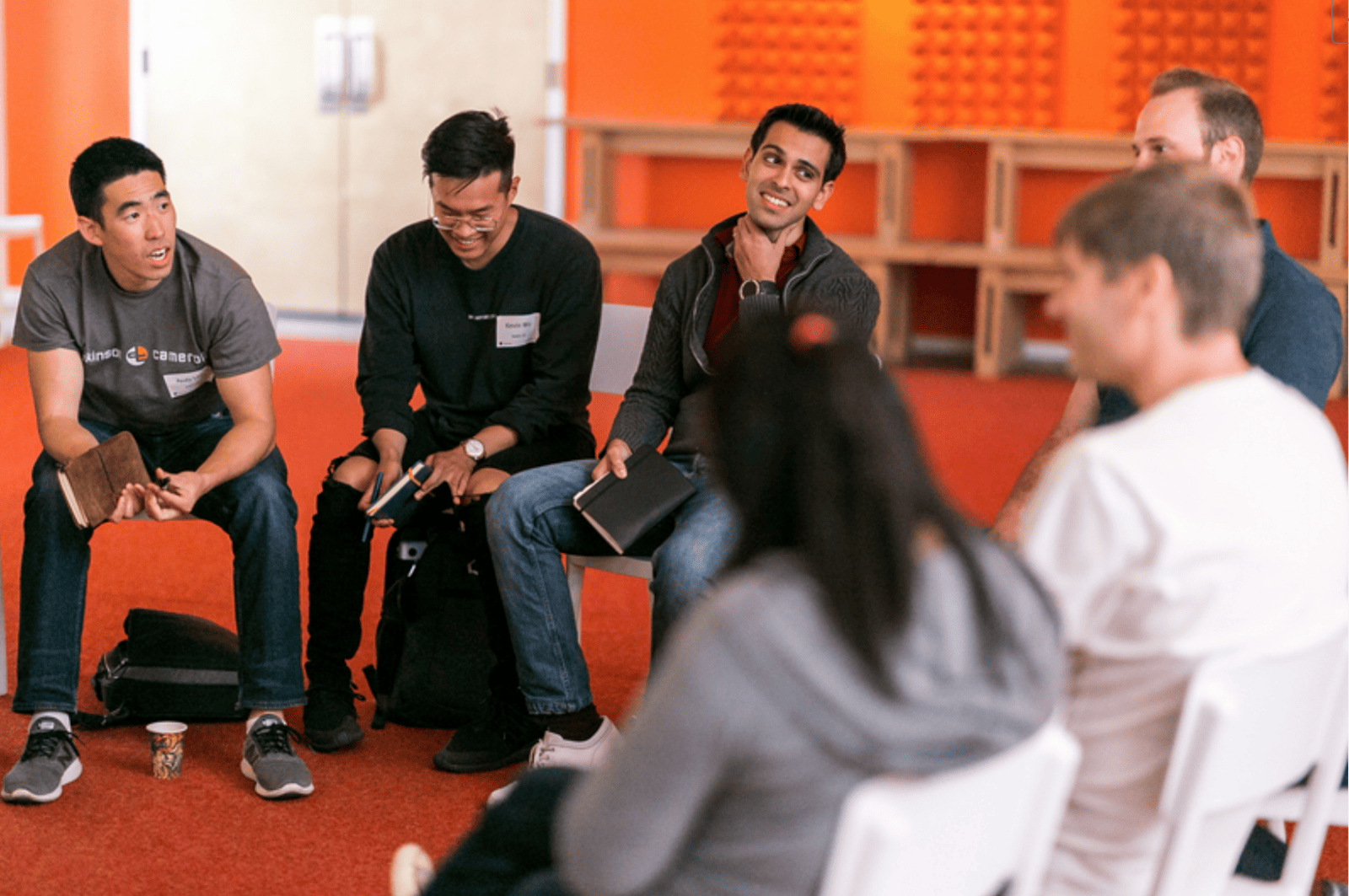
At 26, in YC office hours, I thought our company was destined to be a $1B unicorn.
The hardest type of startups to walk away from are the ones that are in the middle. If your company is failing, you have no choice but to quit. If your company skyrockets, the momentum keeps you in. The startups in the middle are the ones that are profitable, but not growing very fast. In the back of your mind, you wonder, what if my startup inflects after the next feature or pivot? How do you know when it’s the right time to walk away? That’s a decision that I’ve struggled with for a long time.
For me, I started feeling a certain type of founder sadness around year 4.
The business wasn’t growing much. Intellectually, I knew I needed love my customers, but I had fallen out of love with our user-base and the preconstruction workflows they had each day. The company needed me to write outbound sales emails, drive growth, but secretly I missed what I did before (building ML & coding). Nonetheless, I was CEO. As CEO you have to do what the business demands of you; you can’t cherry-pick your work. I contemplated quitting multiple times that year.
Here’s a journal note I wrote one day,
Working on this business is not helping me become the most ambitious, creative, inspiring version of Andy.What’s keeping me at BasisBoard is a commitment to our investors, employees and customers rather than a genuine desire to solve the problem of bidding in preconstruction
That’s when it became clear. What was keeping me at the company was obligation rather than the obsession that comes from a genuine joy of building the business in front of you. This didn’t feel right.
My goal is to find my life-mission company and build a world-changing company that I’m proud of, but I knew deep inside my heart this would only be possible if I were maniacal. Try as I might, I could no longer reach that level of obsession with my first company BasisBoard. So if BasisBoard isn’t it? Why am I still there?
I’m a firm believer that obsession > obligation because obsession is what generates massive returns in life, love, career and overall happiness. Obsession unlocks potential, whereas obligation stifles it. It’s not a decree but a guiding principle.
If I were to offer 1 takeaway from this chapter of my life, I’d encourage every founder who has thought about leaving to ask a question
Am I staying out of obsession or obligation?
It might take multiple asks to find the right answer, but the answer is there if you’re willing to unearth it. In fact, Steve Jobs touched on a similar sentiment in a speech at Stanford
For the past 33 years, I have looked in the mirror every morning and asked myself: ‘If today were the last day of my life, would I want to do what I am about to do today?’ And whenever the answer has been ‘No’ for too many days in a row, I know I need to change something.
- Steve Jobs
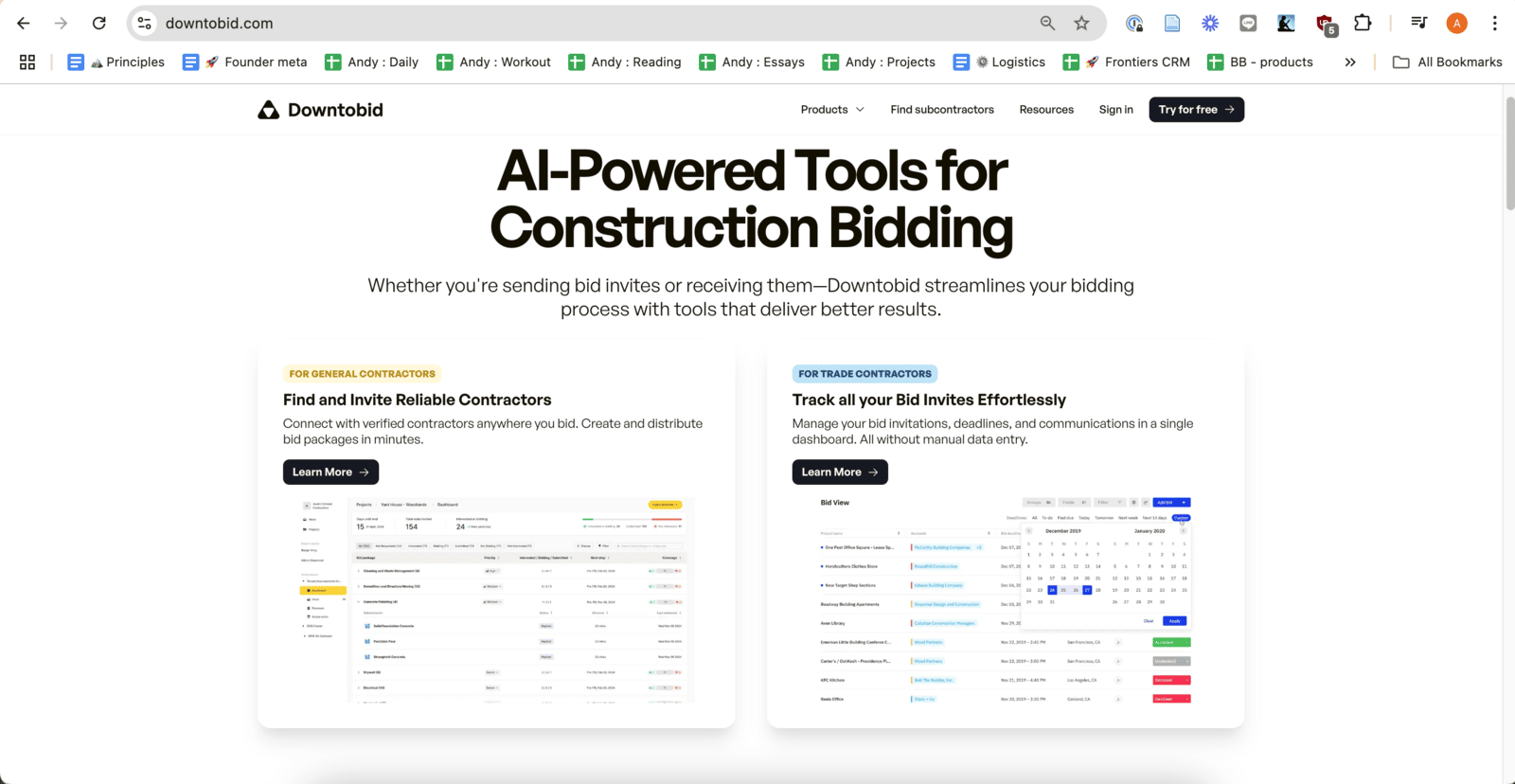
We built SaaS tools for construction companies (GCs & subs)
Get to work and build the next $1B company
A few months later, I told my cofounders and our investors and planned the exit. The day that I left, I was energized and ready to start the journey towards founding my next startup and make it into a $1B company.
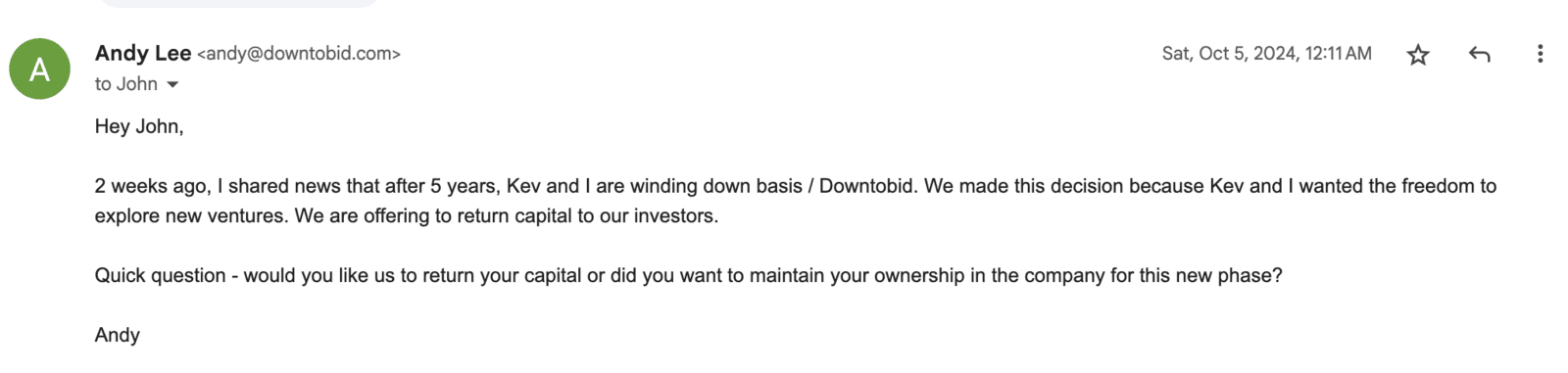
I wrote this to our investors , one of the hardest emails I had to write. Mostly because it meant saying bye to a company I helped found.
Within a week of notifying investors, I developed the perfect strategy.
- Research industries that I found intellectually interesting (space, waste, AI, aging, fusion )
- Find VCs & founders who could systematically incubate $10B companies
- Pitch those individuals on co-incubating a company together
- Build the next $1B company
- Achieve life mission, be fulfilled, live happily :)
I started with a list of ideas (many drawn from YC’s Request for Startups )
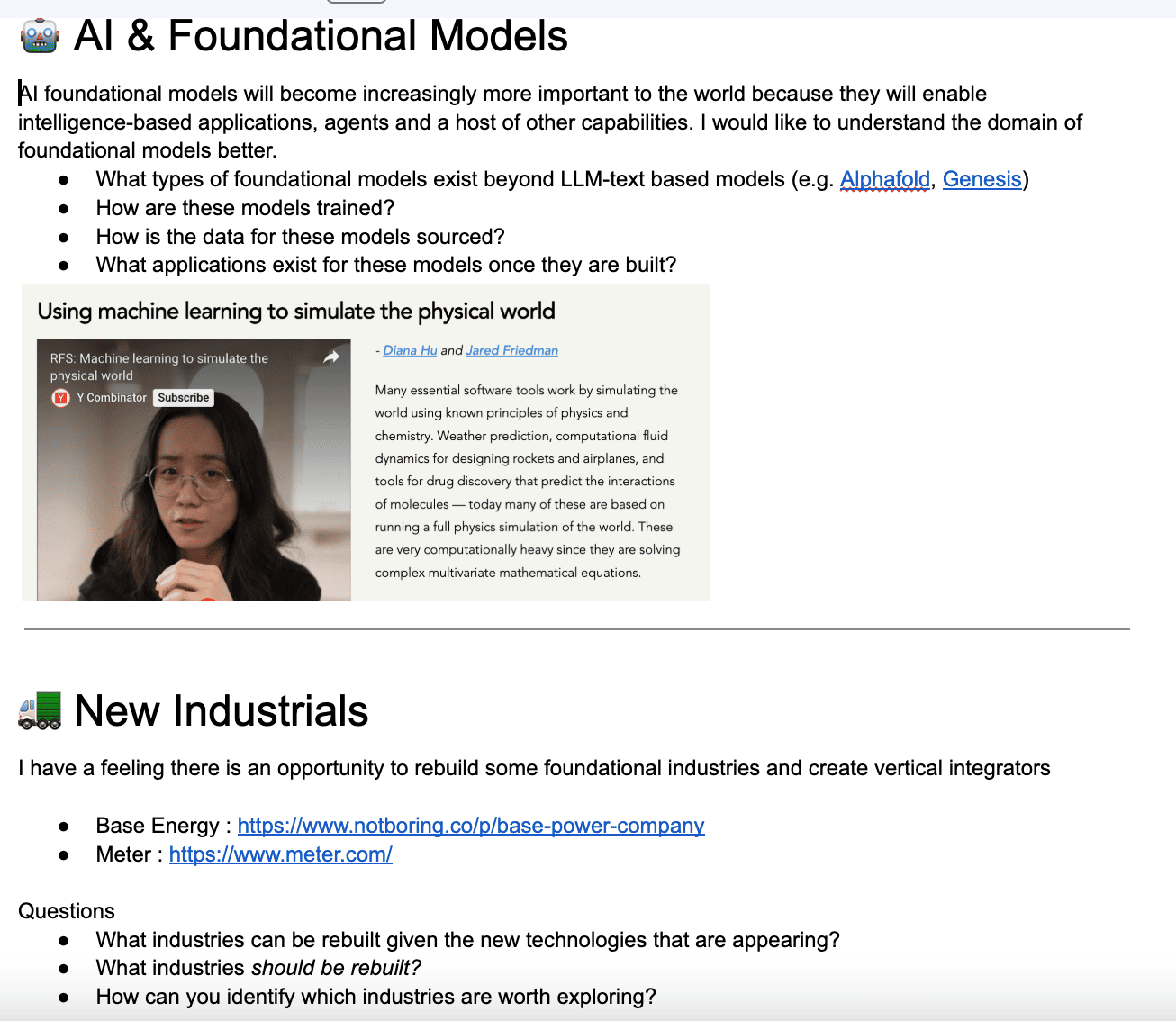
My early research on verticals I was interested in
Then I drafted my cold-emails, using my founder brand to get calls.
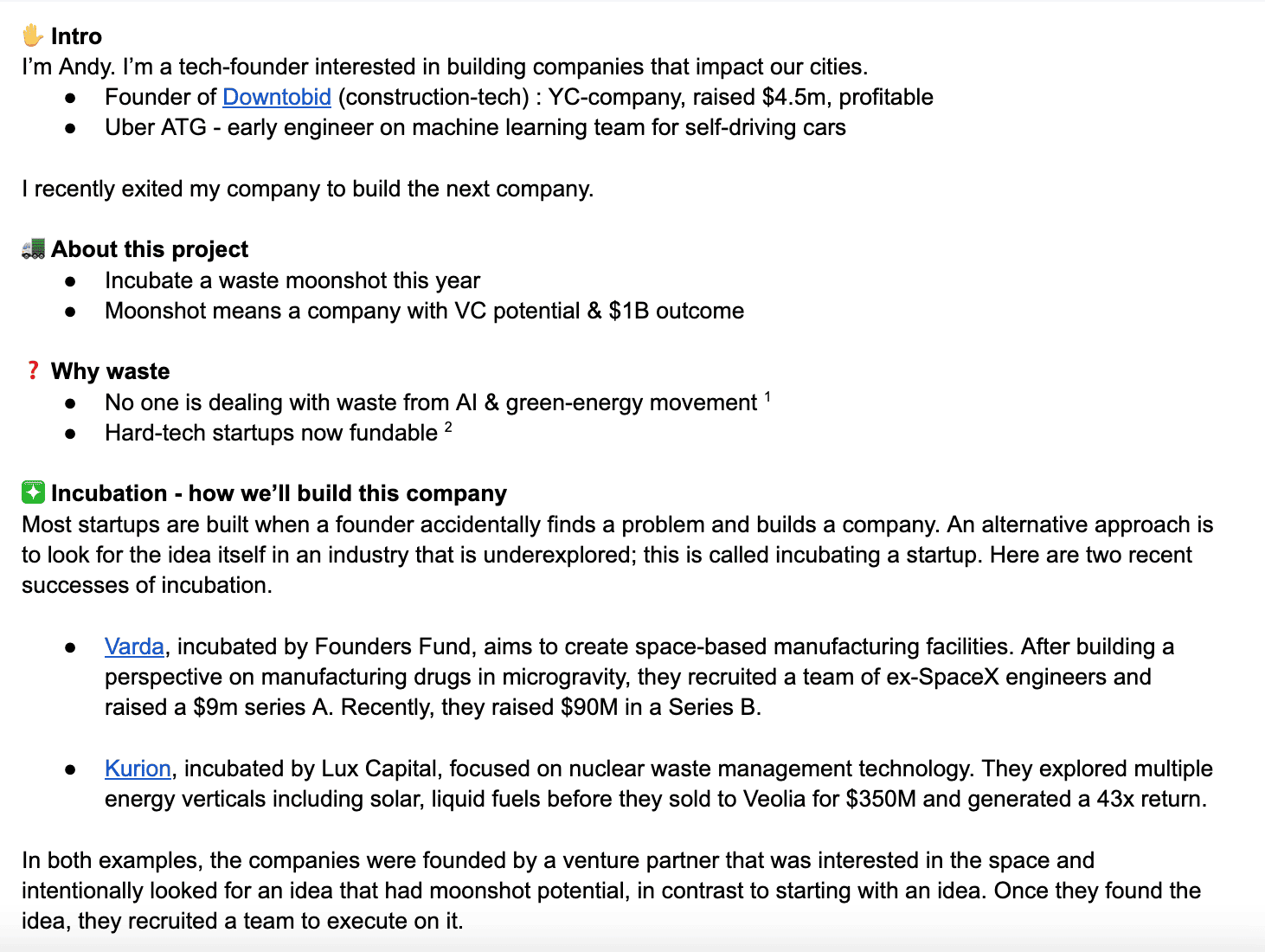
My template for cold-emails to VCs & founders who built incubated $1B companies
Then I started writing substack posts on the idea of incubation.
- Predicting the next $100B startup
- Not Boring should incubate companies
- How to systematically build $10B+ companies
Yet even with a structured, methodical approach—cold-emailing VCs, taking calls with great founders, writing Substack essays on startup incubation—I felt anxious. From years of experience, I’ve learned to recognize when I’m stuck.
Stuck looks like :
- Constantly pivoting from one idea to the next
- Writing and rewriting strategy docs
- Checking my email for responses constantly
Eventually, I realized the real problem. For every single one of my potential incubations—waste management, aging care, AI—I couldn’t bring myself to work on them unless I knew they would succeed. This is why I kept pivoting.
This was the red flag. If my motivation is based solely on the certainty of winning rather than genuine curiosity, I’m going to jump ship the moment things get hard (and they always do!). This is when I realized I actually have no idea what I’m doing or where I’m going.
Then a tsunami of panic.
- What if I’m always in this wandering phase and the world forgets me?
- What if I run out of money and I have to find a normal job again?
- What if I never figure out the life mission company?
- What if I become depressed and I can’t climb back out of it?
- What if I’m stagnant while all my peers race ahead and build great companies?
- What if I stay paralyzed like this every single day and never make progress?
- Why can’t I progress despite knowing I want to build a meaningful company?
Ego & accepting blank white space
It turns out a lot of 2nd time founders go through similar emotions. Vinay sold Loom , tried to instantly start a deep-tech company, then landed on learning physics. Justin Wenig (founer of Coursedog YC W19), tried to start a meditations company immediately after selling his 1st company. He then attempted incubator before landing on his current company starbridge.ai.
In Justin’s own words,
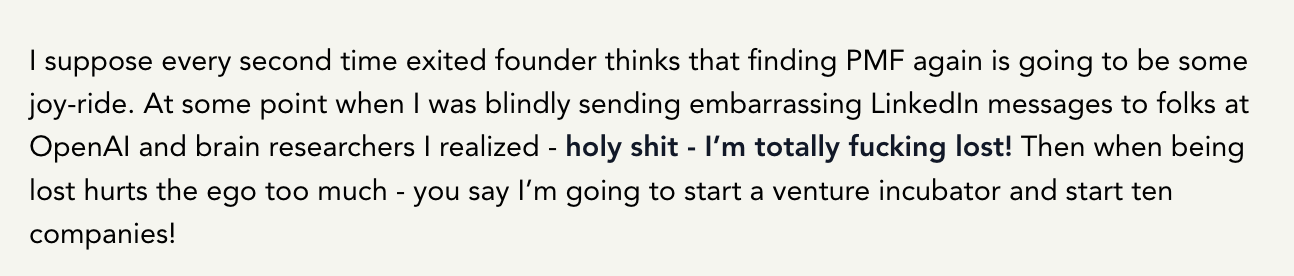
A snippet of Justin’s post-sale reflection post in YC’s founder forum. It was one of the most popular poss of all time.
Both founders admitted to feeling lost and depressed. More and more founders I’ve talked to also struggle with this transition. Why do we all feel lost after our first companies?
Here’s my interpretation.
As founders, we build different companies, with different ideas. Although our outcomes are different, we all share a latent need for purpose. When we lose that purpose, we panic and scramble to get it back — not because we have a clear vision for what’s next, but because not knowing is painful.
So we do what founders do best: we take structured action on ambiguous problems
- We launch the first idea that comes to mind
- We start incubators so we can explore multiple ideas at once
Looking back, my cold-emails, strategic plans, incubations were actually ways to avoid the real problem : I was afraid of admitting I have no idea what I actually wanted next and how to even get it. In silicon valley, where everyone has conviction and their startup is blowing up, this made me feel vulnerable. I felt like all my peers were racing ahead and I was getting left behind. More importantly, I was afraid of feeling vulnerable because I assumed a second of vulnerability would evolve into an eternity of vulnerability.
So I followed a playbook—as if I could outsource the discomfort of not knowing and just “process” my way into passion. But that’s not how it works. You can’t delegate this search. You can’t turn into a robot and expect purpose to appear at the end of a checklist.
If I could give myself some advice. It would be this. You’ll feel lost. You’ll feel vulnerable. And that’s okay. Sitting with that discomfort—without fighting it—is the first step to rediscovering what actually excites you.
Wandering blissfully
Sometime in Feb, I accepted where I was in life.
- I do not know what I want exactly
- I do not know what the next company is
- I do not have a fail-proof process for figuring out my future
- I am just wandering and this makes me uncomfortable
- I am okay with this
There’s something cathartic about admitting these things to yourself. For me, it freed me up from expectations that I placed on myself, my future self. I absolved myself of expectations on where I needed to be compared to my peers. I still acknowledge that I want to build a meaningful, purposeful company, but I also acknowledge that I have no idea on how to do this.
Then something weird started happening. Instead of optimizing for my next company, I started to lean into my hobbies organically, this time without any expectation of a future payout.
Relearning machine Learning
Today, I spend 6-8 hours learning machine learning each day. This week, I spent 4 days deriving the gradient of cross-entropy loss w.r.t. probabilities. I’m relearning multi-variable calculus (chainrule, gradients, jacobians, backprop), getting stuck, getting unstuck and just watching myself improve. Everyday, I make a small twitter post on my progress.
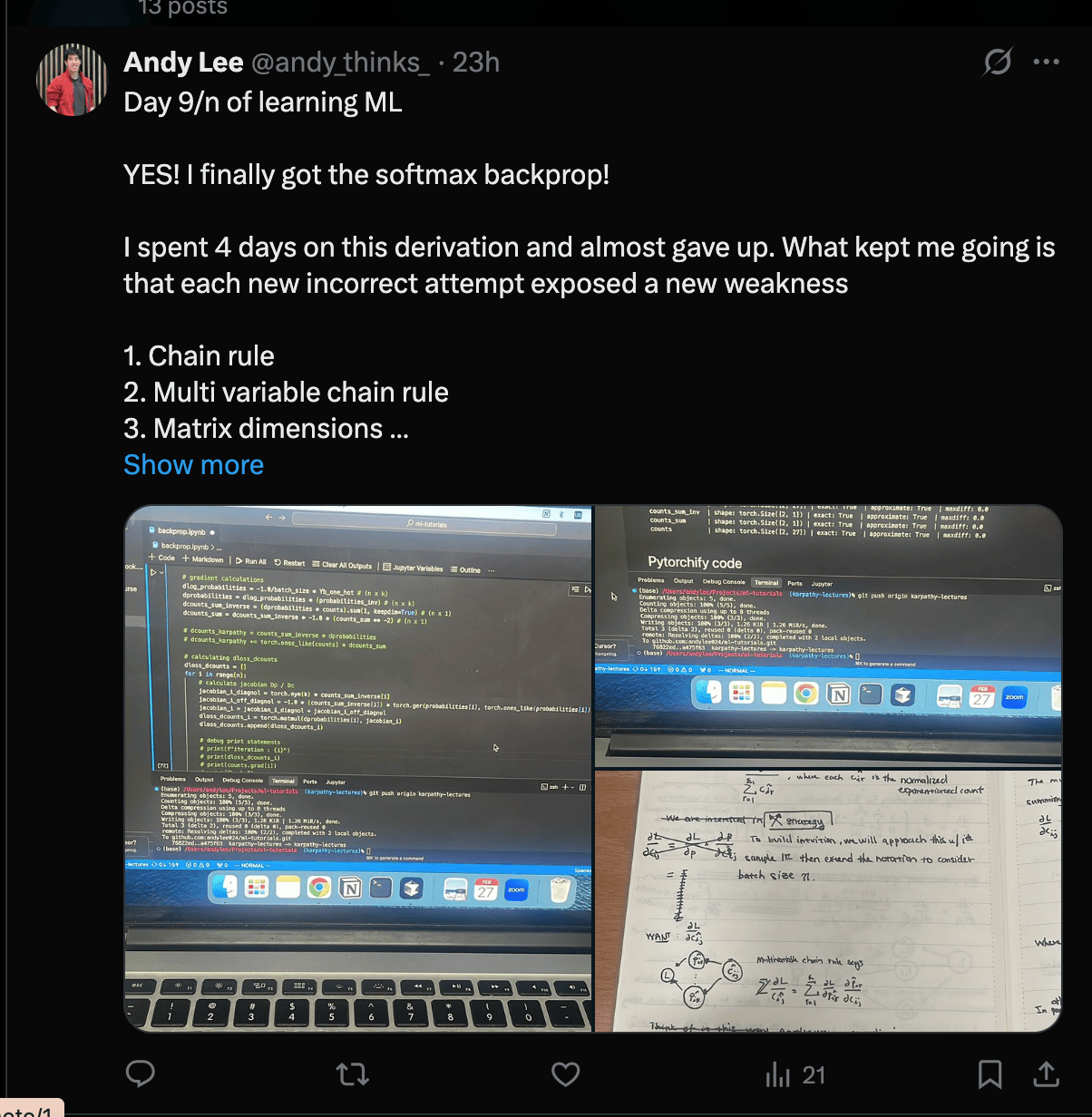
Yesterday’s twitter post on ML - it’s been 9 days straight now
I started working on dunking a basketball
A lifelong goal of mine has been dunking a basketball, but life has gotten in the way. During this transition, I decided to hire a coach and work on my vertical jump. I even created an instagram to document this journey.
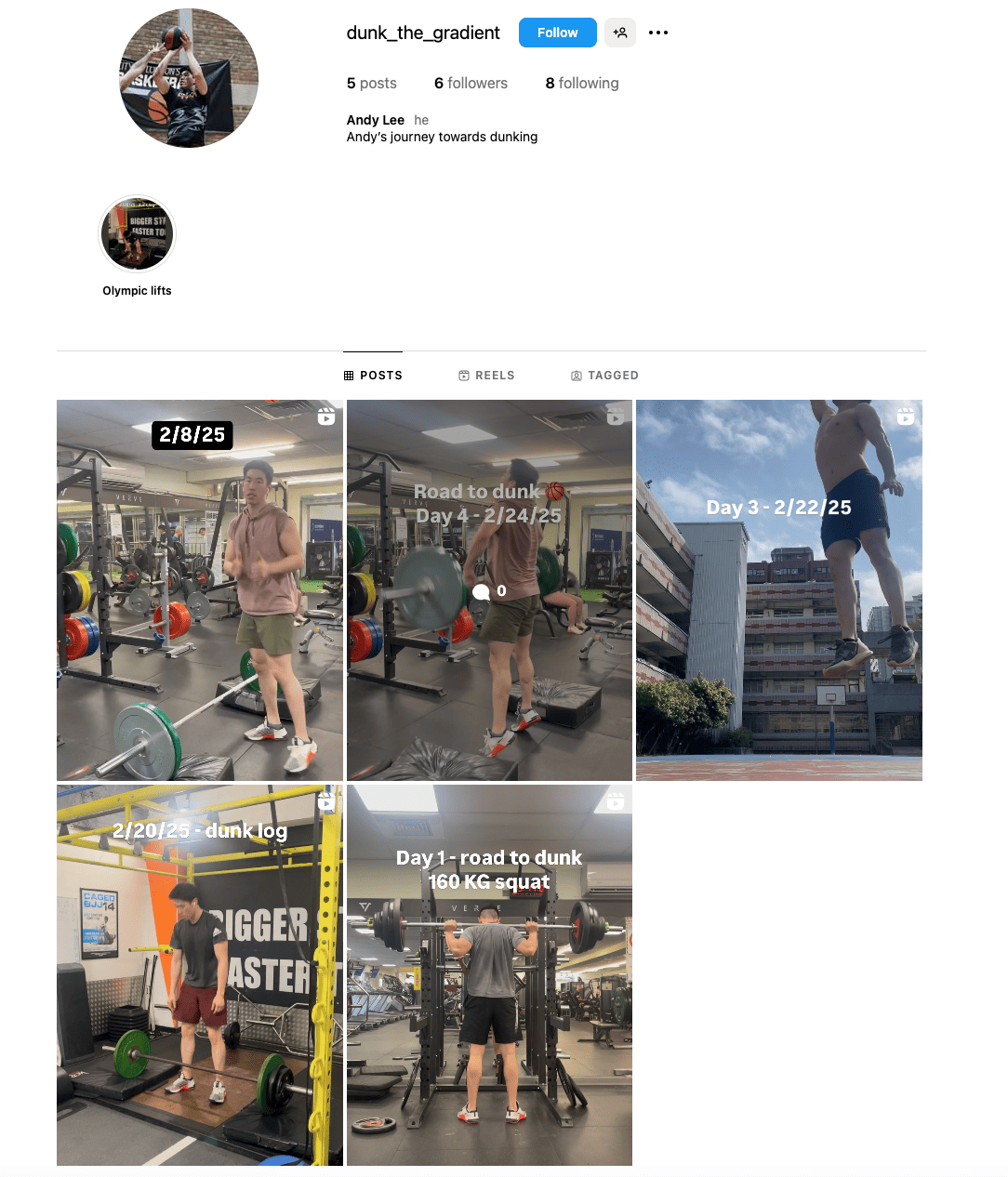
1 post per week to track the dunk journey
I applied and got into Network School
I don’t know much about crypto, but I saw this school and I thought it was an incredible vision. So I decided to apply and I got in.

Each week, I send a few cold-emails
Occasionally, I find an interesting YC forum post or an interesting company and I’ll just send a direct email. Sometimes I pitch an apprenticeship; sometimes I pitch a project; sometimes I ask for advice; sometimes I just say “thanks for inspiring me”. It turns out people are open to interesting collaborations or just giving advice! For example, this week I got some advice from Suhail for learning ML (founder of Playground & Mixpanel).
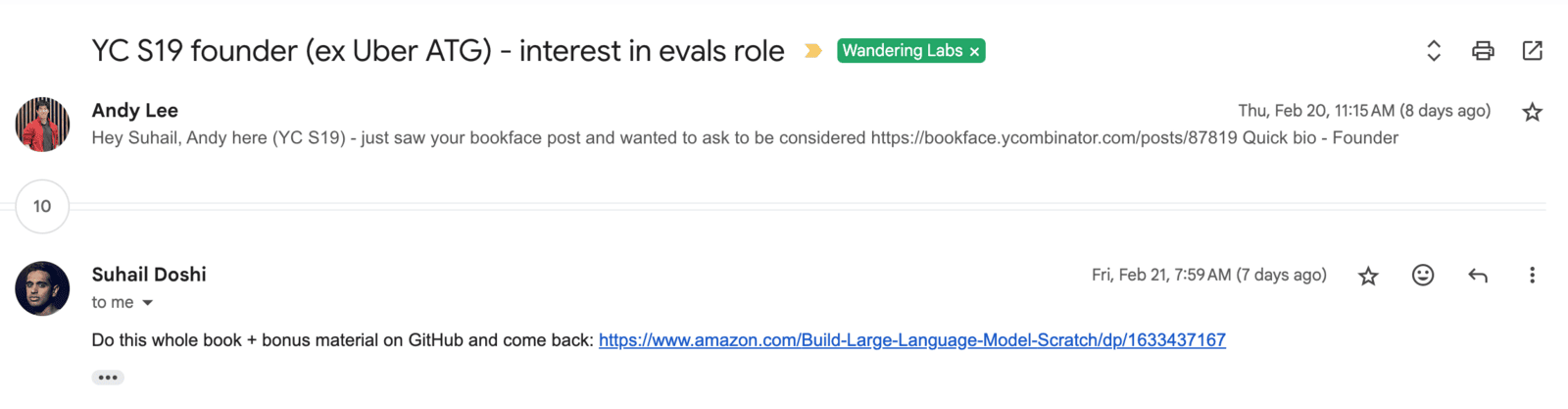
Suhail gave me advice on how to approach ML learning
Optimism
I’m now trying to figure out why i decided to write this personal post. I think it’s for a few reasons.
First, I know the struggle of founders trying to rediscover their purpose (it’s a lonely journey and intimidating) — sometimes knowing others are on a similar path is reassuring.
Second, I made the mistake of immediately trying to build the 2nd company without acknowledging my real fears of being directionless. I hope 2nd time founders will respect the feelings of being lost, sit with the discomfort and pay attention to attempts at masking these emotions (e.g. start an incubator and do 10 ideas).
Third, what unlocked my zen and calm, was accepting my realities : “I don’t know what I want to do next and there’s no exact playbook to figuring it out”. This provided space and permission to explore my hobbies freely.
Why is exploring hobbies freely so important in my eyes? I believe that hobbies pursued organically lead to sustained effort. Sustained effort leads to excellence, obsession and its through obsession that you find insights about what your path will be. So while I have no idea where machine-learning, dunking will lead, I know that I enjoy these activities and can spend an extraordinary amount of time pursuing them. Eventually, this will lead to expertise and I trust the expertise will lead me to the purposeful company. I recognize this sounds a bit abstract and it could be wrong, but this is my current truth and intuition.
Finally, the acceptance of being lost and mindset of exploring hobbies like a kid has put me in an exploratory mindset and helped dispel the past feelings of desperation and anxiety. I believe this is what enables me to send a few cold-emails and apply to things like Network School on a whim. In contrast to 4 months ago, I feel light on my feet—just following my curiosity, sending a few emails, taking a few shots, and seeing what happens. With less pressure, I suspect I’ll send better emails more frequently, which will lead to more opportunities.
So much of the founder journey is about handling your psychology — finding the mindset that allows you to unlock your most creative, ambitious, willing self. I’m not sure where all this goes yet and if being freely curious is the right strategy. All I know is it feels right and I’m excited to see how the story plays out.
Until next time :)
Update
It’s been 78 days since my original post and I thought I’d post an update to share how things ended up.
It’s been an emotional journey.
Over the this period, I worked on a variety of projects
- coded an LLM from scratch
- lots of dunk workouts
- attended Network School
- built an IQ test for Network School’s fellowship program
On a whim, I delivered a lecture about building a hard-tech industrial startup at Network School and then an innocent thought
I think I could be very happy building hard-tech energy startups
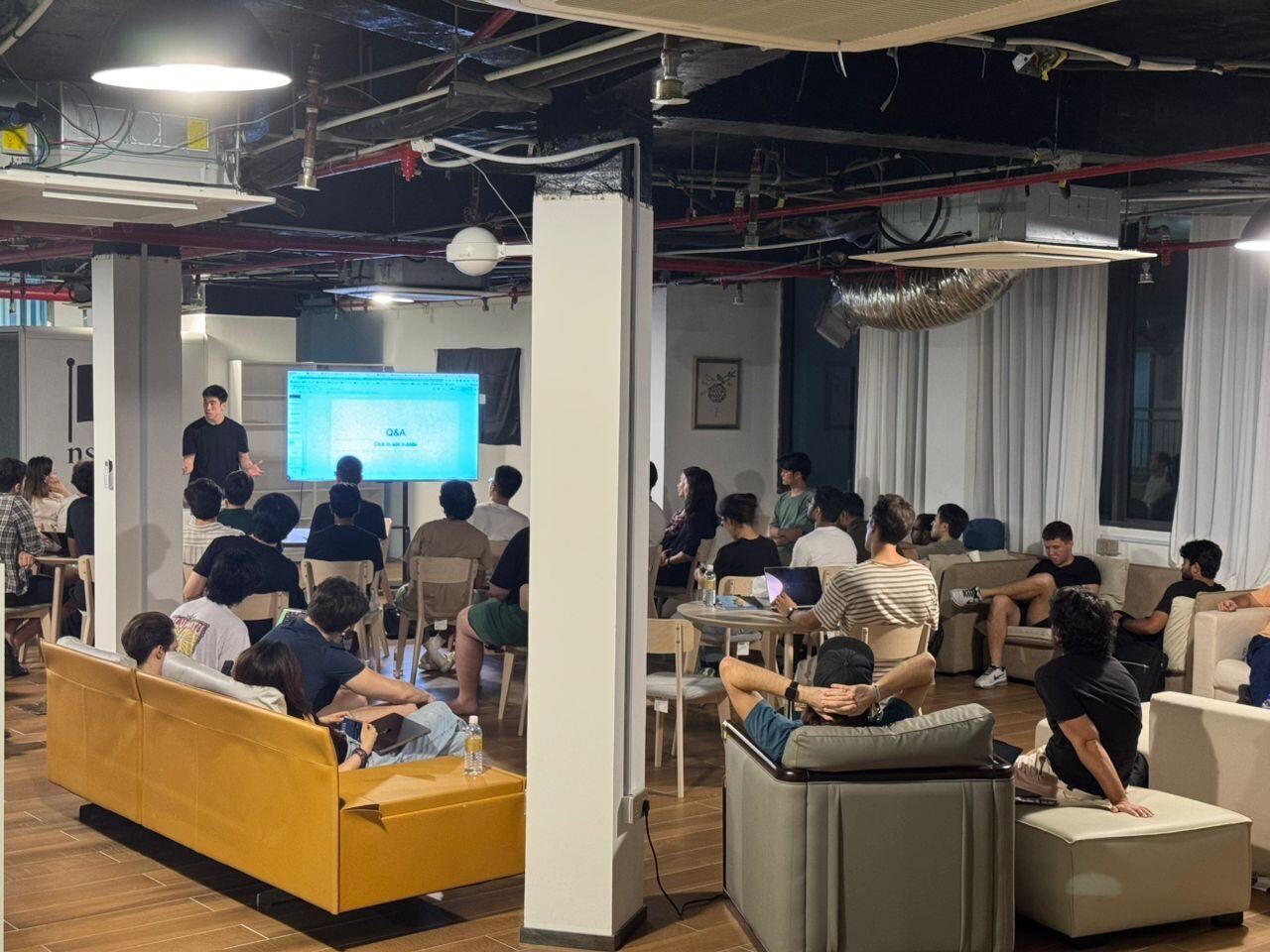
In the spirit of just following your heart, I decided to just cold-DM some startups doing interesting things. One of them happened to be General Matter , a new startup incubated by FoundersFund doing nuclear fuel enrichment.
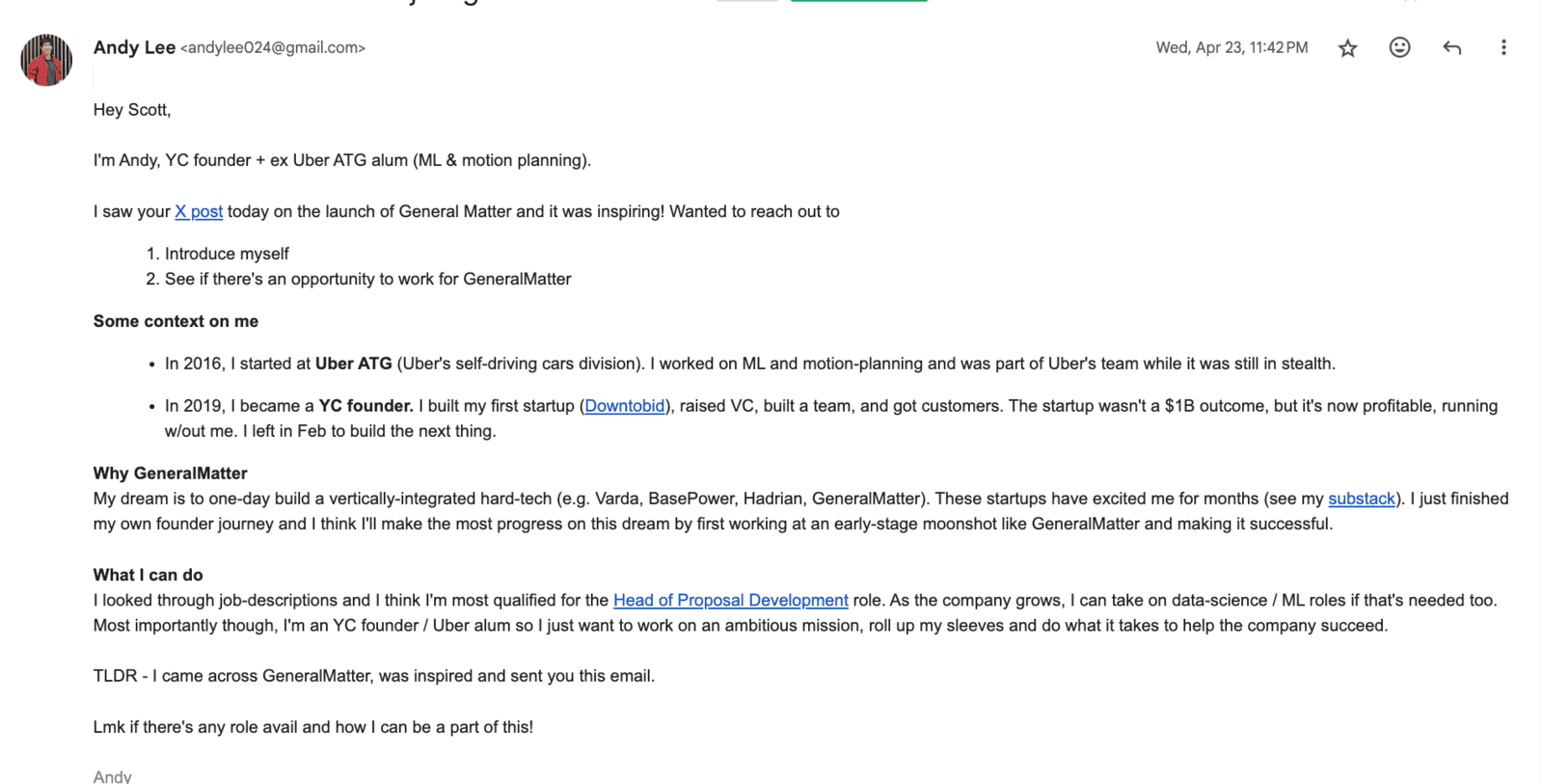
We jumped on a call and they offered me a way to test the waters as an intern. And for the first time in a long time, I smiled :) because in my heart I was freaking excited. So this will be the next destination : learning about nuclear energy at a startup trying to build useful things.
As I look back on this journey, I realized how hard all this was. Some days, I felt like things would be okay . Most days, I felt like I was spiraling and often woke up with a cold-sweat. I think the hardest part is not knowing when the answer will appear (tomorrow, 1 week later, 3 months later, never). That uncertainty is hard for anyone.
I have a soft spot for all the founders and people that are in their wandering phase because I know how hard it is. If I could go back and give myself advice, I’d say this. First, accept that wandering will be hard and the only way forward is through the discomfort. Second, follow the things that give you energy because those are the breadcrumbs to the solution. Third, don’t think when ideas and opportunities come up. In the same way I said “yes” to Network School and cold-DM’ing hard-tech startup, don’t overthink the opportunities that appear and just explore them freely. It may not feel like it, but these are the little actions that help you wander to the right destination. Stack them up each day, each week, each month and the destination will illuminate itself.
Good luck fellow wanderers!
Andy
p.s. I have a small ask - I’d love to hear from other founders who have navigated the 2nd time founding journey! If that’s you, what were the 1-2 things that were most important to helping you figure things out? Drop a comment below.
Thanks for reading Wandering founder! Subscribe if you enjoyed this or drop me a note - they really give me a lot of energy.